As I described in my post “About… my daily health routine: food”, another popular question that I’m asked is what supplements I take. Before I go into details, I’ll highlight one important point. Supplements can never replace food; the best supplements will always be food. As the philosopher Hippocrates says: let food be thy medicine and let the medicine be thy food. However, I believe that supplements can help prevent, treat and minimize symptoms of illnesses. Furthermore, they can also cure some pathologies with the right protocol, under professional supervision.
My first contact with supplements was approximately eight years ago. I never really believed in them and was very sceptical that I would notice any difference. But surprise! They worked almost immediately. I took a multivitamin for the first time, the cheapest one, because I was constantly tired. I experienced profound depletion in my energy levels and out of 10, I was probably at 3. After the second day of taking the multivitamin, I started to feel better and after a week, I regained my energy as before. It was almost like a miracle.
But looking at the past, I take this conclusion now. I moved to London in 2010 and although I always cooked my food, I didn’t have the knowledge about nutrition that I have now, after my studies at the College of Naturopathic Medicine (CNM). My choice of food was good, but it could’ve been much better. Just as an example, I used to buy baguettes made with white refined flour. Refined means poor quality, unhealthy, no nutrients and no vitamins. If I eat bread now, I go for the whole grain that preserves all goodness of the grain such as fibre, vitamins and minerals. Clearly, my bad choices had an impact on my health. Had I chosen the right food at the time, for sure I wouldn’t have needed to take multivitamins. That’s why I say that supplements can’t replace food.
A few months later, another health issue came up. The pain around my joints and bones. The lack of sun massively dropped vitamin D levels in my body. A blood test confirmed that I was deficient in that vitamin. So, I started taking some vitamin D tablets and after 3 to 4 weeks I noticed a huge difference, the pain was gone. Obviously, I now know that mushrooms, salmon, sardines, tuna, egg yolks or herring, among other food, contain high levels of vitamin D. Therefore, I should have increased the intake of these foods during the winter time.
These two scenarios describe my initial contact with the wide and fascinating world of supplements. I have tried many of them from that moment. Some just because I wanted to test and the other ones to achieve some of my personal goals.
Do I take supplements all the time?
No. I take supplements mainly when I consider that they will enhance my health. So, in winter time vitamin D is the classic one on my work desk.
Omega 3. On and off. If my skin goes very dry suddenly, Omega 3 works really well for me.
Multivitamins. Not really, as my diet is very clean and full of greens and vegetables which provide me with a lot of nutrients and vitamins. However, if I feel excessively tired, I may take a good multivitamin for a week or two, which helps my body cope better with stress and it brings back my natural energy balance.
Magnesium. I love magnesium, it is a great supplement involved in more than 300 functions in the body. As I do a lot of sport, I go to the gym 4 to 5 times per week, I regularly take magnesium that helps me sleep better and deeper. When our body is under stress for whatever reason, magnesium is one of the first minerals to be depleted. Heavy lifting, running, playing football… it drives the body to high levels of stress.
Greens. Chlorella is one of my favorite greens for its powerful detoxification action. However, I haven’t been taken it for a while on its own. I have switched for mixed of greens which contain chlorella, alfafa, spiriluna, wheat grass, barley grass… I don’t take it regularly, but I would say that I do it perhaps once or twice a week. I usually add it to my vegan protein.
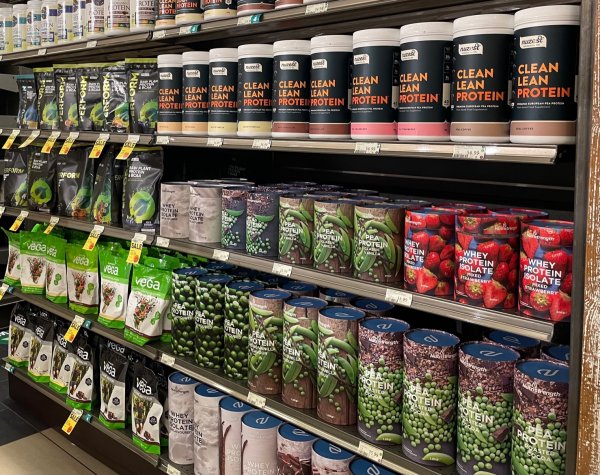
Protein shake. I may have one or two servings every day. Each serving may have around 20 to 25g of protein. I usually consume it after the gym or as a snack between breakfast and lunch or lunch and dinner.
I use vegan protein because whey protein doesn’t agree with me. It’s fine if I take whey protein randomly but, If I consume it every day, I feel bloated and constipated. Right now, I won’t enter into details about which protein is better vegan, you can check my previous article “About… my daily health routine: food“.
BCAA. If you do sport, you are probably familiar with the word BCAA. It stands for Branched Chain Amino Acid. When consumed, they increase muscle growth, decrease muscle soreness, prevent muscle damage and enable faster recovery after the exercise. I’ve been taking them a couple of times a few years ago and I kind of saw a bit of difference. My muscles grew quicker and felt less tired.
Vitamin C. I take it frequently, maybe 4 or 5 times a week. Either power mixed with my protein shake or capsules. It’s a great antioxidant and a fantastic supplement for strong immunity.
Echinacea. Talking about strong immunity, I use echinacea in winter time to prevent caching a cold or flu.
Probiotics. Now and then. I’m not very regular with them, but I do feel it when I take them.
Milk thistle. It is fantastic herb for detoxifying t liver. I usually don’t drink alcohol, but in festive seasons such as Christmas, Easter or summer holidays, I am more flexible with it. I like to enjoy a cold beer on the beach or good wine while I am having dinner with my family and friends. In all these occasions, I always use milk thistle to help my body get rid off quicker of the alcohol toxicity. I am very sensitive to alcohol as I don’t drink regularly, so a couple of beers or two glasses of wine make me feel merry.

That’s mainly my supplements routine but, as I said at the beginning, the best supplement will be always our natural food. As I don’t suffer any illnesses, I don’t follow any supplement protocol, I just try whatever I think can work for me. Food is crucial for our health, in fact food can make us ill or healthy. But I do believe that supplements can do much more for many pathologies rather than pharmaceutical drugs. In many cases, high blood pressure can be reduced with supplements rather than drugs. Insomnia can be “cured” with supplements without creating a strong addiction like prescribed drugs usually do.
I will always advise that, if you are on medication, don’t replace it with supplements without asking your GP. You can be advised by a nutritionist to take this and that supplement, but you must ask you GP about it. If they are not happy or not familiar with the world of supplements, look for another more open-minded GP.
