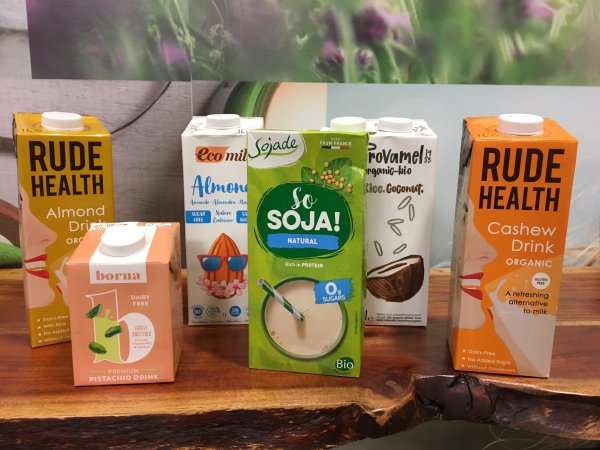
Almond, coconut, soy, cashew, tiger nut and rice, among the others, don’t have nipples. It is a universal truth which is difficult to debate. However, a debate around milk and what milk is has taken place recently due to the boom of alternatives to cow’s milk. Like in any war there are always two sides. In one trench there is a dairy lobby industry with a white flag. In the other one there is a multi colour flag that represents variety of sources: seeds, nuts, legumes or grains. All of them lead an alternative movement to traditional milk.
Mammary secretions
The dairy industry considers that plant based drinks are not milk because they are not made from mammary secretions. And the dairy farmers are not alone. Worldwide, they have support from main health authorities such as the European Food Safety Authority (EFSA) in Europe or the Food and Drugs Administration (FDA) in the United Stated. As an example, soy milk is labelled all over the world as “soy milk”, except in European countries where the legislation prohibits the use of word “milk” for drinks that are not made from mammary secretions.
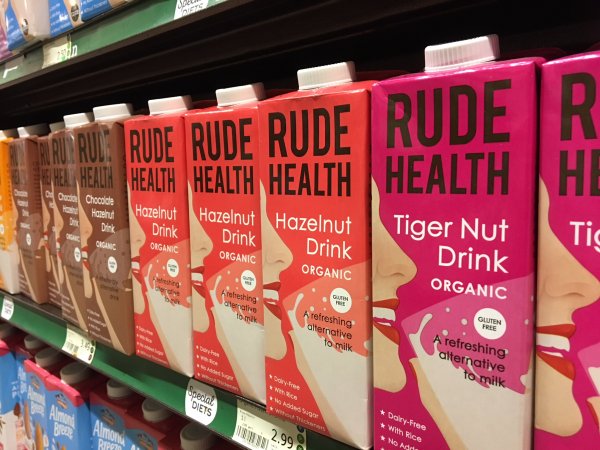
Council Regulation 1234/2007 clearly specifies that “the term milk shall mean exclusively the normal mammary secretions obtained from one or more milkings without either addition there to or extraction there from” with an exception for coconut milk and almond milk (1). Even with some exceptions, the dairy lobby resists to name as milk the plant based products. The white flag supporters talk about vegetables drinks or plant-based liquids instead.
Why this boom?
Alternative options to cow’s milk came to the market as a miracle for people allergic to dairy products or just because they dislike the taste. But, many people react to vegan milk too. Although the ratio is believed to be far from that of the dairy products.
Is vegan milk healthier?
Cow’s milk is superior in almost all aspect to alternative plant based milk. However, every day more and more people question themselves if it is right to drink cow’s milk. Humans are the only species in the animal kingdom that consume milk after weaning. But, that’s not milk from our own human species, rather we drink milk produced by different species. This traditional believe or habit may explain why there are millions of lactose intolerant people.

Usually, animal milk is richer in fat, protein, enzymes, vitamins and sugar. Plant-based products can’t compete and that’s a reality. Nevertheless, that still doesn’t mean that we are correct in drinking cow’s milk after weaning. Moreover, most of vegan drinks are fortified with vitamins and minerals to have a better nutritional value. This practise is very common these days in 90% of food. But, the fortification process can be very harmful for human health with food overloaded with unhealthy ingredients such as sugars (under thousands of different names), stabilisers or refined oils. That also very often happens with plant-base milk. Having said that, it is necessary to mention that there are great alternative vegan drinks in the market, free from nasty ingredients. You just need to check the label carefully!
Nutritional value comparative (2)
| Cows milk low fat | Almond drink | Coconut drink | Oat drink | |
| Calories | 100 | 30 | 45 | 130 |
| Carbohydrates (g) | 13 | 1 | 1 | 24
|
| Sugar (g) | 13 | 0 | 7 | 5 |
| Protein (g) | 8 | 1 | 0 | 4 |
| Fat Saturated (g) | 2.5 or 1.5 | 2.5 or 0 | 3.5 or 4 | 2.5 or 0 |
| Vit D (mcg) | 25.00% | 25.00% | 25.00% | 25.00% |
| Calcium (mg) | 30.00% | 45.00% | 45.00% | 35.00% |
| Potassium (mg) | 570 | 160 | 40 | 95 |
Cow’s milk or vegan plant base drinks? I prefer to call them vegan drinks purely for linguistic reasons, without any negative connotation. Between those two options the best one will always be very personal and unique. Whatever works for one person may not work for the others. So, follow your gut and open your eyes. Just because something that has been done for many years does not necessarily mean that it has been right. “Stealing” cow’s milk for human consumption may go against nature. Cows produce milk because they have to feed their offspring and not human babies.
References:
https://www.ncbi.nlm.nih.gov/pmc/articles/PMC5069255/
https://blog.myfitnesspal.com/a-nutritional-comparison-of-dairy-and-plant-based-milk-varieties/
